

CASE STUDY
40+ Tanks. Multiple Floors. One System They Can Trust.
How Generation Next Fertility Rebuilt Trust in Cellular Cryotank Monitoring in the Middle of Manhattan
Background
For fertility clinics, maintaining safe cryogenic storage is everything. Every tank holds irreplaceable reproductive tissue, so every alert matters. The fear of a tank failing creates stress for the laboratory team responsible for keeping their samples safe.
So when it comes to choosing a monitoring system for their cryotanks, it’s critical the lab has a system that works and they can trust.
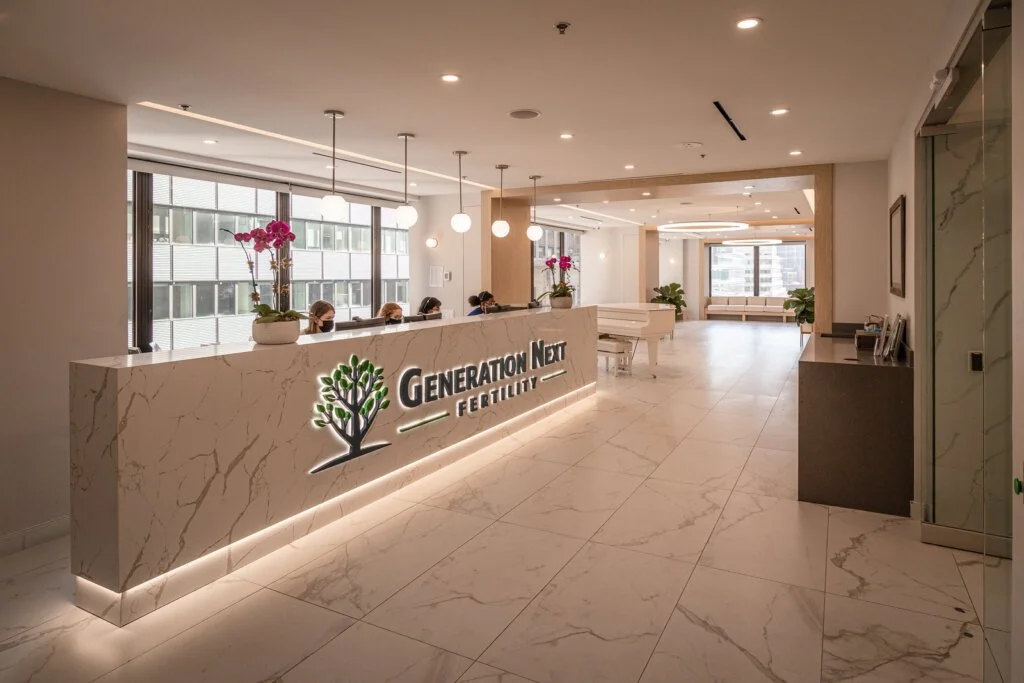
For Generation Next Fertility (GNF), a boutique, physician-owned fertility clinic in Midtown Manhattan, cryotank monitoring is especially critical as they are performing 1600+ egg retrievals annually and storing all of their samples onsite.
“We’re a fairly new lab, only 9 years old, and maintain control of all of our cryo inventory. Keeping everything safe is incredibly important to us,” says Dr. Alicia Broussard, HCLD, Lab Director at GNF.
But for years, GNF’s previous cryotank monitoring system was creating frustration and eroding trust. The monitoring system GNF had in place was temperature and cellular-based. Over time, tanks began losing connection, false alarms became routine, and troubleshooting efforts became increasingly disruptive.
Today, using the CryoScout® by Boreas Monitoring Solutions, the team reports no false alarms, strong connectivity, easier tank management, and a confidence in the system that has allowed the staff to replace the safeguards they previously had in place due to constant fear of missing a tank failure.
The Customer
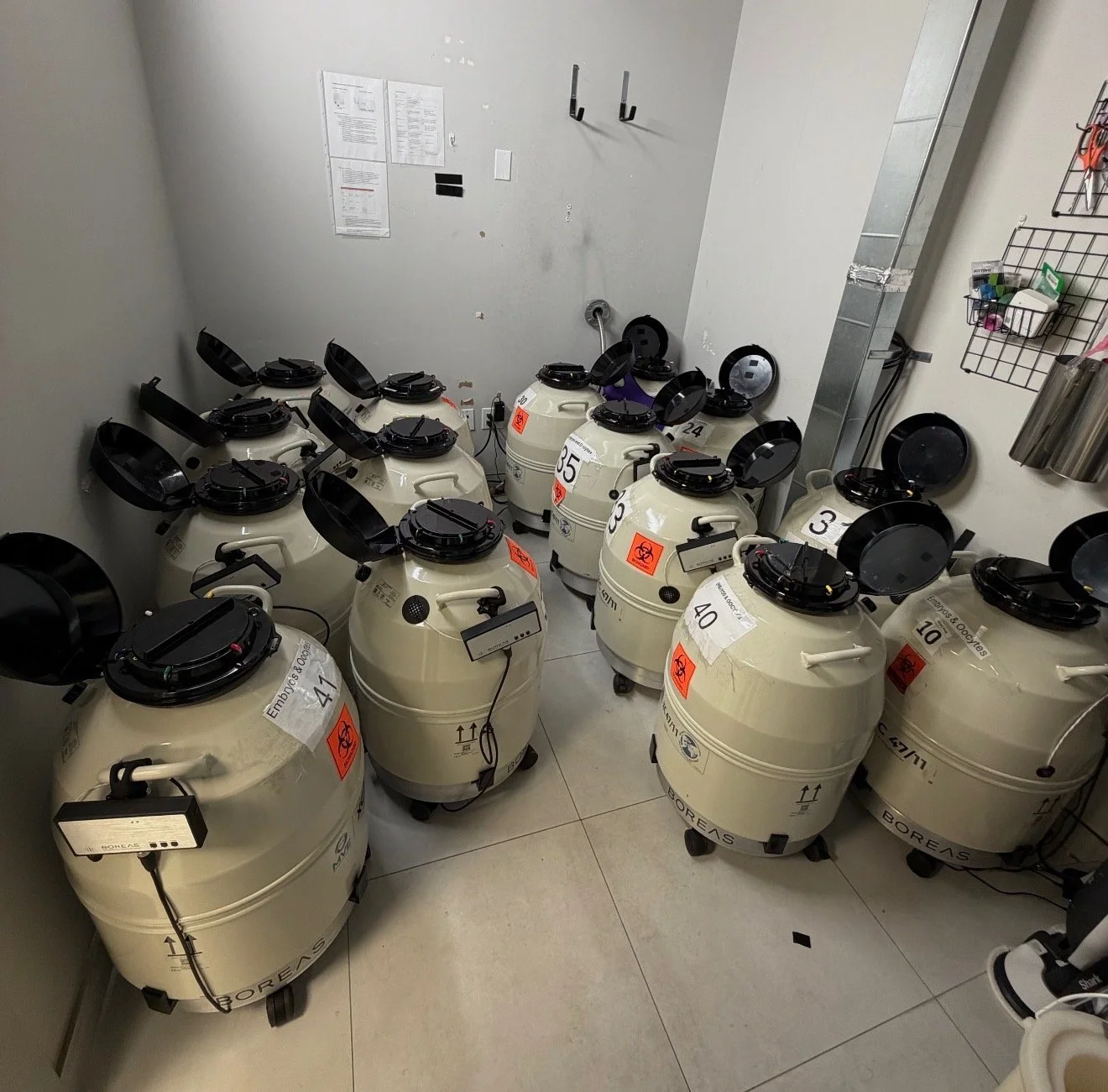
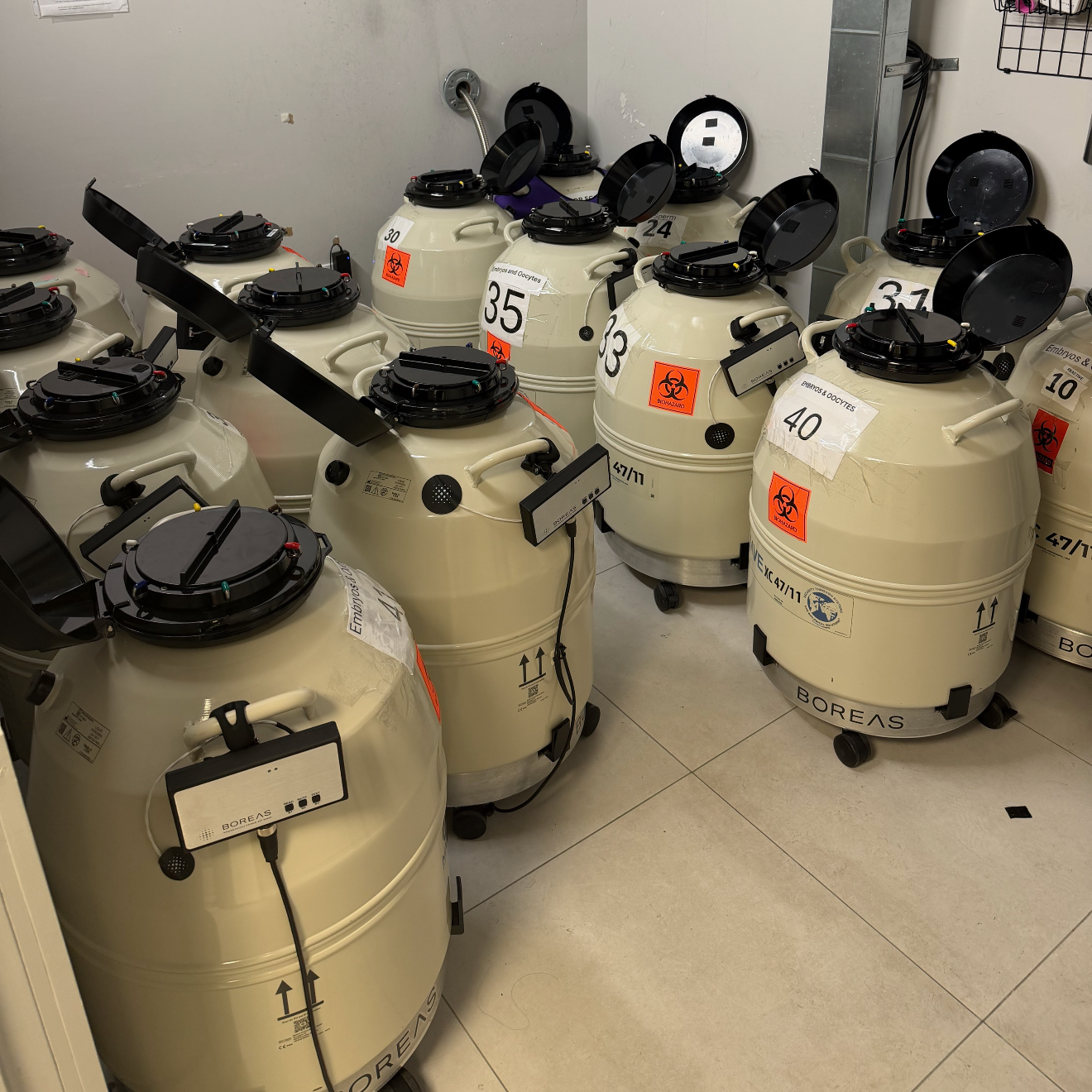
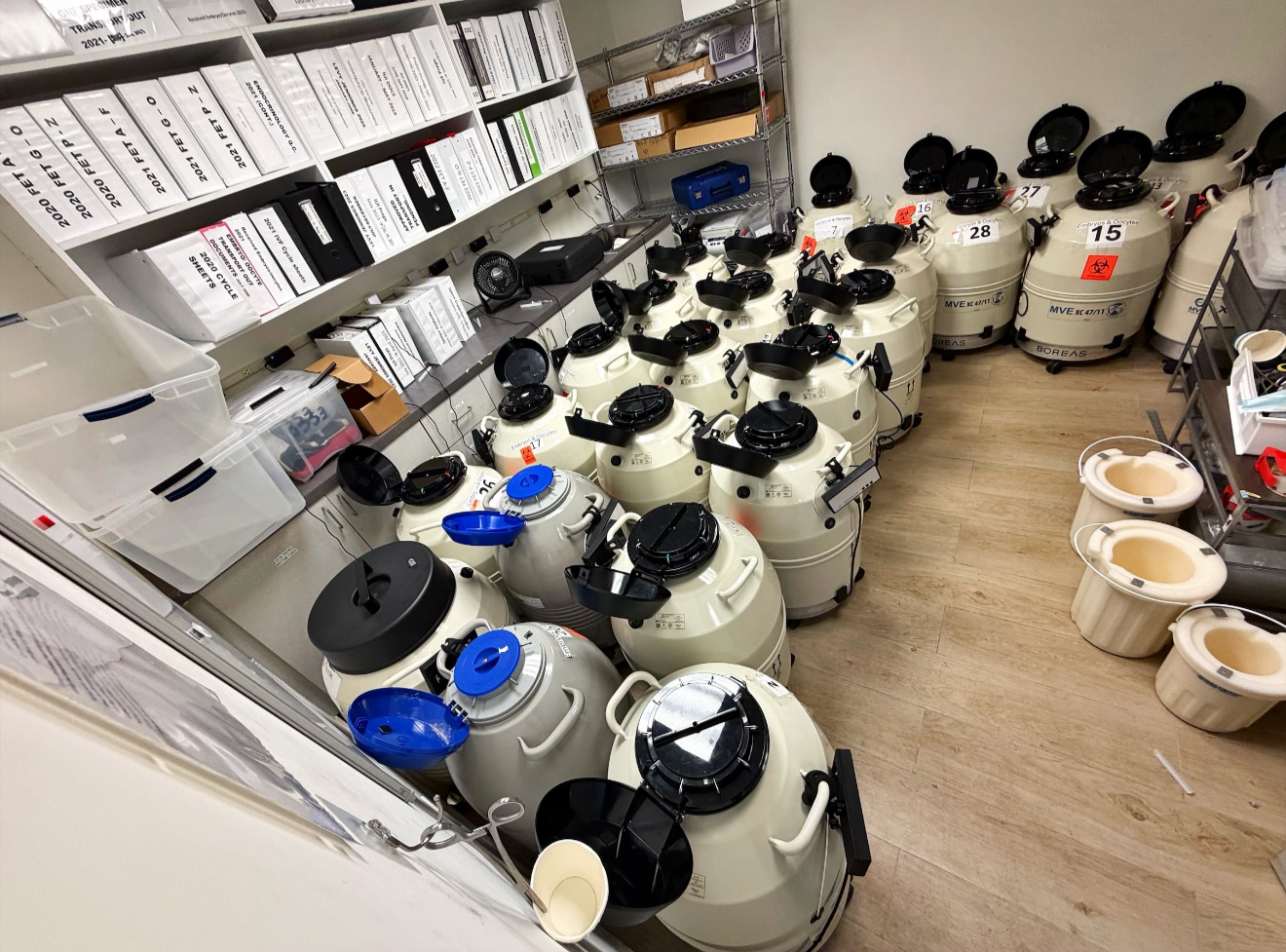
GNF manages a significant cryogenic inventory onsite, including over 40 cryotanks, located on multiple floors due to being in a high-rise in Manhattan. Because the lab is not part of a larger conglomerate shipping and storing specimens offsite, maintaining visibility and control over every tank is a core part of its operating philosophy.
For the GNF team, cryotank monitoring needs to support more than compliance, it also needs to support peace of mind.
The team needs to know that every tank is being monitored with the best available technology, every alert they receive is real, and every issue will be identified well before patient samples are at risk.
That confidence had become difficult to maintain with their previous monitoring system.
40+ Tanks. Multiple Floors. One System They Can Trust.
The Challenge: A Monitoring System That Wouldn’t Stay Connected
GNF’s previous cryotank monitoring system utilized cellular connectivity. Upon installation several years ago, the system immediately had unreliable connectivity issues. To improve performance, internet gateways were added, with cellular serving as a backup.
The hope was that this dual approach would stabilize the system, and for a few years, it helped.
But roughly a year before switching to Boreas, the issues returned.
GNF’s cryotank rooms are located across multiple floors of their Manhattan high-rise. On one of the floors, connectivity issues were limited. Most of the lab’s storage, however, is located on another floor, where the system began experiencing significant recurring problems.
The situation became increasingly difficult to troubleshoot. Additional gateways were installed, but the new gateways created their own challenges. Some did not work properly with the lab’s internet, and others required whitelisting, which created additional IT involvement. In some cases, tanks connected to newer gateways still would not reliably connect.
What was supposed to be a simple solution became very complicated.
“We were told it was plug and play and would be no problem to get set up,” said Broussard about adding additional gateways. “But we spent hours working with IT on both sides and could never figure out why the newer gateways weren’t working.”
Tanks were going offline several times per week. Lab staff even moved as many tanks to the floor with better connectivity that they could to try to maximize the connection, but that caused its own problems. For a growing, freeze-all lab, overcrowding storage areas created daily workflow challenges. The monitoring problem now affected how the lab physically operated.
“It’s Midtown Manhattan. There’s Not Much You Can Do.”
As GNF continued working through the connectivity issues, one explanation kept coming up: cellular congestion.
“We were told that because of the cellular congestion in midtown Manhattan, there’s not much you could do.”
That explanation can feel final. If the issue is out of their hands, or a result of their circumstances, the lab could be left to believe that unreliable monitoring is simply part of the operating reality.
But GNF needed a system that worked. The tanks needed to be monitored and the team needed reliable alerts. And the lab needed to be able to grow without reorganizing rooms around gateway coverage, and workflows around an untrustworthy system.
The Human Cost: False Alarms, Alarm Fatigue, and Constant Backup Work
In addition to the connectivity issues, Broussard also knew that with this system being temperature-sensor based, everything would be destroyed by the time they got a notification. And that’s if everyone trusted the notification was real.
False alarms several times per week were creating alarm fatigue with the staff. There would be major system issues where they were getting called every 15 minutes overnight and there was no way to stop it.
“There was such a sense of not feeling secure in the system that every single person, including the doctors, were on the alarm call chain,” explains Broussard.
To combat this feeling, the staff also measured and filled every tank, every single day – which is suboptimal for workflow and liquid nitrogen use. The tanks don’t require that, but the monitoring system simply did not provide enough confidence to do otherwise.
“We were filling every day because we were so insecure about whether our tanks were being monitored properly. The temperature probes were very fragile and broke frequently, and would all of a sudden show the tanks heated up and gave us a heart attack. So the last task was for two people to top off the tanks every day.”
It became clear to the staff that GNF needed a better way to monitor their cryotanks – one that could connect reliably, reduce false alarms, and support a better workflow for the staff.
“We were filling every day because we were so insecure about whether our tanks were being monitored properly. The temperature probes were very fragile and broke frequently, and would all of a sudden show the tanks heated up and gave us a heart attack. So the last task was for two people to top off the tanks every day.”
Considering Another Cellular-Based System
Broussard has been a big fan of the concept of weight-based monitoring for cryotanks. Growing up around cryotanks on her family’s farm and later receiving her PhD and High Complexity Lab Director accreditation, she has a deep understanding of liquid nitrogen and how cryotanks operate, and understands how much more accurate weight is at detecting the change in liquid nitrogen over temperature, but was apprehensive when she found out the Boreas system was also cellular-based.
Given what she’d experienced over the last few years, she preferred there be the dual option of a backup internet connection.
However, the Boreas team realized early on that building a system utilizing cellular LTE connectivity rather than relying on Wi-Fi was going to provide the easiest and fastest adoption for clinics, especially in Hospital and University settings. It would allow labs to avoid the complications that come with adding third-party devices to sensitive network environments. So Boreas built their system and chose connectivity partners that would allow the system to connect to the strongest carrier in the area, even if you only have 1 bar of cellular service.
When GNF and Boreas initially spoke in late 2025, Boreas was already monitoring tanks in basements and buildings built to sustain nuclear war. The Boreas team was more than confident in their system providing GNF the connectivity needed, but were also sensitive to the struggle GNF had experienced, so they agreed to run a 30 day pilot to confirm connectivity.
Implementation: A Full Rollout Without the IT Burden
Broussard didn’t even need the full 30 days to commit to Boreas. GNF was quickly ready to do a full lab rollout with the CryoScout® on their entire fleet of tanks and the installation process was simple. GNF assigned one embryologist to work with the Boreas team, and the installation of 40+ tanks across multiple floors was done in less than a day.
“The funniest part of it all was the hardware being delivered because the scales are so much bigger than temperature probes,” laughs Broussard.
For GNF, the difference in implementation experience mattered. The previous system had required repeated troubleshooting, multiple gateways, IT involvement, whitelisting challenges, and unresolved connectivity issues. With Boreas, the system was installed without any of that.
The systems connected immediately, started collecting tank health data, and provided the peace of mind in their cryotank monitoring that the GNF team had been missing for years.
The Boreas Experience
Since starting the pilot in November, and completing the full rollout in December, GNF’s experience has been dramatically different from its previous monitoring system.
The team has reported no false alarms since making the switch, and only experienced one brief connectivity-related event – but the way it was handled reinforced confidence. Broussard appreciated that Boreas contacted her proactively to let her know there was a connectivity issue, but they were monitoring it. Additionally, the amount of tank health data that the Boreas portal provides helps labs to be confident in the state of their tanks, even in a brief connectivity issue.
The biggest workflow change has been to adjust for evaporation rate since GNF was filling the tanks every day. In the Boreas portal, customers are able to adjust their evaporation rate threshold to fit their workflow.
GNF ended up adjusting more than their evaporation rate though – they adjusted their fill frequency as well. Before Boreas, GNF’s daily fill schedule was driven by insecurity. It was their safeguard to ensure the tanks wouldn’t run dry overnight while they were asleep.
Broussard shared that the lab is down to filling twice per week. Being able to log into the Boreas portal daily and see the graphs that show the tank weight, percentage full, evaporation rate and more allowed for this workflow adjustment.
The team is confident that tanks they don’t go into daily are still healthy, and they love that the Boreas portal shows them when there’s been a fill event.
“Given the fact that our doctors allowed us to go down to twice a week [for fills] is a huge indication of how much we trust the system. We’ve never done that before, this is the first time in the history of the company. It shows how much we trust Boreas. It preserves our tanks and our sanity,” says Broussard.
“Given the fact that our doctors allowed us to go down to twice a week [for fills] is a huge indication of how much we trust the system. We’ve never done that before, this is the first time in the history of the company. It shows how much we trust Boreas. It preserves our tanks and our sanity.”.
Rethinking Cellular Monitoring
GNF’s story is powerful because the lab did not switch from a cellular system to a hardwired or Wi-Fi based system. It switched from one cellular-based monitoring system to another.
After switching to Boreas, the team views cellular monitoring differently. When we asked Broussard how the experience changed her opinion of cellular-based monitoring, the response was simple: “We feel good now.”
Midtown Manhattan is exactly the type of environment where businesses may think a cellular-based system will struggle. And maybe they’ve been told that. But Boreas has worked reliably where the previous system did not.
For any other labs that are apprehensive about cellular-based cryotank monitoring, Broussard shares, “Where we’re located, plus being in a high-rise building, there was a lot going against us. Based on the connectivity issues we’ve had in the past, if we can make it work, you can.”
Conclusion
Boreas was built by lab professionals, for lab professionals. The system was born out of the challenges our co-founders were up against every day in the lab, worrying about their cryotank monitoring.
The degree of tank health data the system provides, the way the alarm management system is set up, and the choices about the hardware were made from real-life experience of managing cryotanks.
Lab professionals and patients deserve better cryotank monitoring. They deserve confidence that their tanks are safe, that an alert or alarm is meaningful, and that operational decisions can be made based on real data.